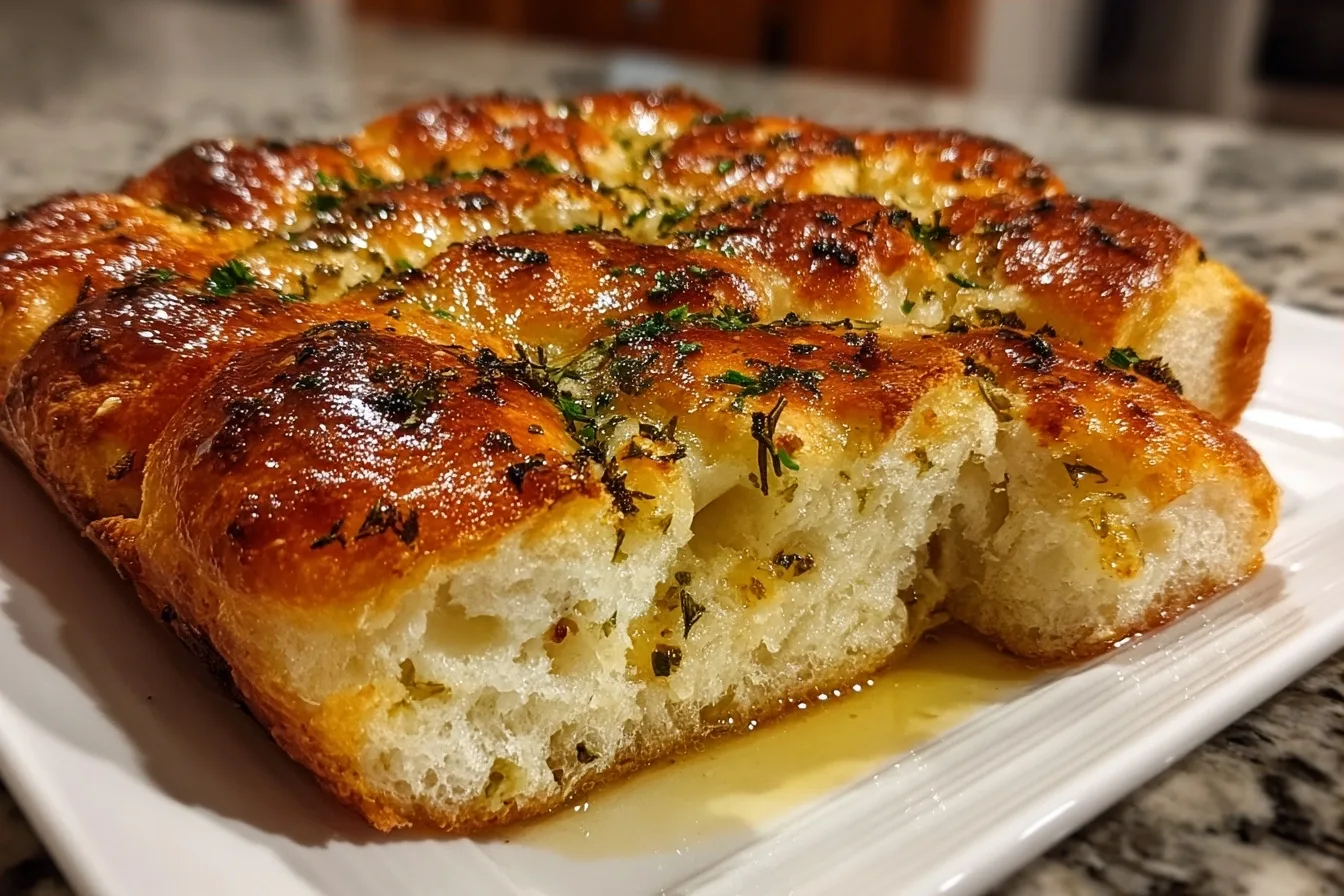
This easy focaccia bread recipe produces a golden, crusty Italian loaf with a soft, airy interior using simple pantry staples. Achieving bakery quality results at home requires minimal effort thanks to a no-knead process. By prioritizing hydration and time, you create the signature dimples that hold pools of flavorful olive oil. This straightforward method transforms basic flour into a impressive centerpiece for any dinner table.
| Prep Time | Cook Time | Total Time | Servings | Difficulty | Cuisine |
|---|---|---|---|---|---|
| 15 min | 25 min | 4 hours | 8 | Easy | Italian |
Why This Recipe Works
This approach succeeds because it relies on overnight fermentation to develop complex flavor and structure without manual kneading. The high hydration dough creates the signature open crumb structure synonymous with traditional Italian focaccia. I personally find that using a high-quality extra virgin olive oil makes a massive difference in the final taste of the crust.
The dimpling process adds visual appeal and functional depth by creating pockets for toppings or coarse salt. Home bakers often struggle with dense bread, but this recipe removes the stress of dough handling techniques. You simply stretch the dough and let the oven perform the heavy lifting.
Ingredients
| Ingredient | Quantity | Notes |
|---|---|---|
| Bread Flour | 500g | All-purpose works but provides less chew |
| Warm Water | 400ml | Consistent room temperature is vital for yeast |
| Instant Yeast | 7g | Check expiration for reliable rise |
| Kosher Salt | 10g | Coarse grains provide better texture |
| Olive Oil | 60ml | Use extra virgin for authentic flavor |
Step-by-Step Instructions
Mixing the Dough
- Combine flour, yeast, and salt in a large mixing bowl using a silicone spatula.
- Pour in the warm water and stir until no dry streaks of flour remain visible.
- Cover the bowl with damp fabric to allow the dough to rest in a warm area.
Fermentation Phase
- Let the dough rise for two hours until it doubles in physical size.
- Transfer the dough to an oiled baking pan and let it spread naturally.
- Allow a second rest for forty-five minutes before proceeding to final assembly.
Baking Process
- Dimple the surface of the dough with your fingertips to create deep indentations.
- Drizzle the top liberally with olive oil and sprinkle with coarse sea salt.
- Bake at 425 degrees Fahrenheit for twenty-five minutes until the top reaches a golden brown color.
Chef Tips for Perfect Results
- Use high-quality olive oil because it acts as both a flavoring agent and a frying medium during the bake.
- Avoid rushing the second rise, as this determines the final thickness and airy pockets of the bread.
- Check the temperature of your water carefully; water above 110 degrees will kill the yeast activity.
- Dimple the bread firmly, pushing your fingers all the way down to the surface of the pan.
Common Mistakes to Avoid
One frequent error involves using cold water, which slows down the yeast and results in a heavy, flat loaf. Always use lukewarm water to kickstart the proofing process effectively during the initial stage.
Avoid pressing the dough too gently when creating dimples. You need deep pockets to ensure the oil settles into the interior rather than burning off on the surface. If the dough snaps back, let it rest for five minutes and attempt the stretch again.
Variations and Substitutions
| Ingredient | Substitution | Impact on Flavor |
|---|---|---|
| Rosemary | Fresh thyme | Provides a floral, earthy aroma |
| Sea Salt | Garlic powder | Adds a savory, pungent punch |
| Bread Flour | Semolina | Increases crunch and nuttiness |
Serving Suggestions and Pairings
Serve this bread alongside roasted vegetable pasta or thick lentil soup for a balanced meal. It also functions perfectly as the base for gourmet sandwiches or as an appetizer with balsamic glaze dipping sauce. Consider pairing it with a fresh caprese salad for an authentic Mediterranean dining experience.
Storage and Reheating
| Method | Duration | Instructions |
|---|---|---|
| Room Temp | 2 days | Wrap in aluminum foil or plastic bag |
| Freezer | 1 month | Slice before freezing for single servings |
| Oven | 5 minutes | Reheat at 350 degrees to restore crust crispness |
Nutritional Information
Approximate values per serving.
| Nutrient | Amount |
|---|---|
| Calories | 210 |
| Protein | 6g |
| Fat | 8g |
| Carbohydrates | 32g |
Frequently Asked Questions
Can I use active dry yeast instead of instant yeast?
Yes, you can substitute active dry yeast by activating it in the warm water for ten minutes before adding dry ingredients. Ensure it foams to verify the yeast remains alive before proceeding.
How do I know when the focaccia is finished baking?
The bread is finished when the top appears deep golden brown and the underside sounds hollow when tapped with your finger. Visual cues provide the most accuracy for home ovens.
Why is my dough sticking to the pan?
Dough sticks when there is insufficient oil on the bottom of the baking dish. Always coat the entire interior of the pan with a generous layer of olive oil before placing the dough inside.
Can I make the dough one day before baking?
Yes, you can refrigerate the dough for up to twenty-four hours after the first rise to improve fermentation. Bring the dough to room temperature before shaping it in the pan for the best texture.
What should I do if the crust is too tough?
Reduce the baking time by three minutes or check your oven calibration with an external thermometer. Overbaking causes the crust to become excessively hard and dry, so pull it the moment it browns.
Mastering this easy focaccia bread recipe allows you to skip store-bought loaves for a fresher alternative. You now possess the knowledge to mix, proof, and bake professional-style bread in your own kitchen. Consistency comes with practice, so experiment with herbs or toppings to make it your own. Enjoy the incredible aroma of fresh bread filling your home as you share this simple, delicious loaf with friends and family.
Print
Easy Focaccia Bread
- Total Time: 240
- Yield: 8 servings 1x
- Diet: Vegan, Vegetarian
Description
This easy focaccia bread recipe produces a golden, crusty Italian loaf with a soft, airy interior using simple pantry staples. By prioritizing hydration and time, this no-knead process creates the signature dimples that hold pools of flavorful olive oil. It is a straightforward method that transforms basic flour into an impressive centerpiece, perfect for any dinner table without the need for complex labor-intensive techniques.
Ingredients
500g Bread Flour
400ml Warm Water
7g Instant Yeast
10g Kosher Salt
60ml Extra Virgin Olive Oil
Coarse sea salt for topping
Instructions
Combine flour, yeast, and salt in a large bowl using a spatula.
Pour in warm water and stir until no dry streaks remain.
Cover the bowl with a damp cloth and let rest in a warm area.
Allow the dough to rise for two hours until doubled in size.
Transfer dough to an oiled baking pan and let it spread naturally.
Rest the dough for 45 minutes.
Dimple the surface with fingertips to create indentations.
Drizzle liberally with olive oil and sprinkle with coarse sea salt.
Bake at 425 degrees Fahrenheit for 25 minutes until golden brown.
Notes
Use high-quality extra virgin olive oil for the best crust flavor. Check yeast expiration before starting to ensure a proper rise. Store in an airtight container for up to 3 days or freeze for longer shelf life.
- Prep Time: 15
- Cook Time: 25
- Category: Trending
- Method: Baking
- Cuisine: Italian
Nutrition
- Serving Size: 1 slice
- Calories: 285
- Sugar: 0.5g
- Sodium: 450mg
- Fat: 9g
- Saturated Fat: 1.5g
- Carbohydrates: 42g
- Fiber: 1.5g
- Protein: 8g
- Cholesterol: 0mg