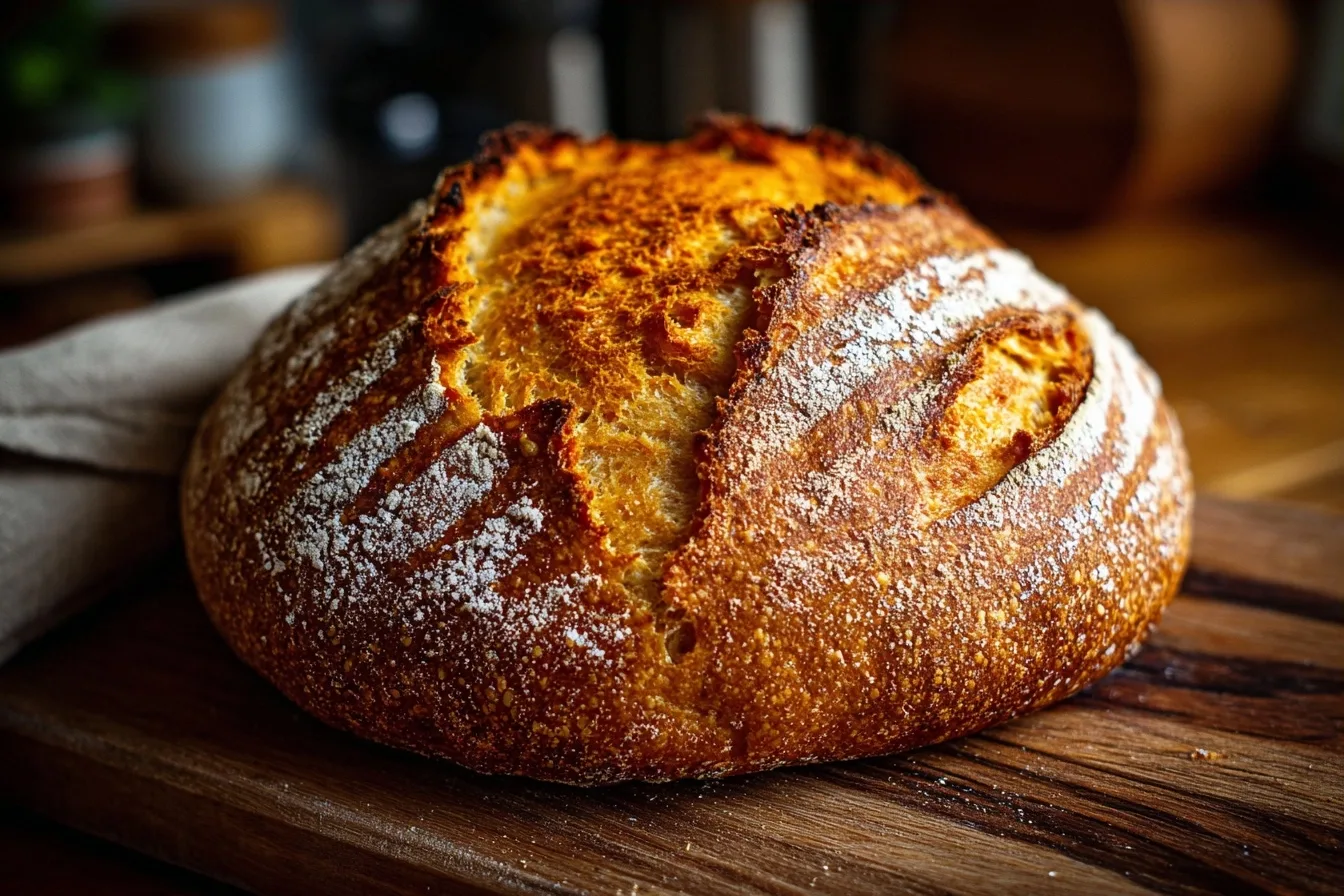
Pumpkin sourdough bread combines the tangy complexity of a wild yeast starter with the earthy, autumnal sweetness of roasted pumpkin puree. This rustic artisan loaf features a golden-brown, crackling crust and a moist, vibrant crumb that pairs perfectly with both sweet and savory toppings. Proper fermentation techniques turn simple flour, water, and seasonal pumpkin into a nutritious loaf that defines the harvest baking season.
| Prep Time | Cook Time | Total Time | Servings | Difficulty | Cuisine |
|---|---|---|---|---|---|
| 30 mins | 45 mins | 24 hours | 10 slices | Advanced | American Artisan |
Why This Recipe Works
This recipe works because the natural acidity of the sourdough starter balances the dense, sugars found in pumpkin puree. The enzymes in the active culture break down complex starches, which creates a much lighter texture than a standard quick bread or yeast-leavened loaf. By using a long, cold proofing method, the flavors of the pumpkin infuse deeply into the dough, resulting in a more complex final profile.
My experience baking this loaf suggests that maintaining a high hydration level is key to achieving an open, airy crumb structure. Adding spices like cinnamon, nutmeg, and ginger directly into the flour ensures every bite delivers a balanced, warm flavor profile. This method creates a loaf that remains fresh for several days, as the pumpkin puree acts as a natural moisture retainer within the gluten network.
Ingredients
| Ingredient | Quantity | Notes |
|---|---|---|
| Active Sourdough Starter | 100g | Must be fed and active |
| Pumpkin Puree | 150g | Canned or fresh roasted |
| Bread Flour | 500g | High protein count required |
| Warm Water | 200g | Filtered, chlorine-free |
| Sea Salt | 10g | Fine grain for even mixing |
| Pumpkin Spice Blend | 1 tsp | Homemade or store-bought |
Step-by-Step Instructions
Mixing and Autolyse
- Combine the active sourdough starter and warm water in a large mixing bowl until fully dissolved.
- Add the pumpkin puree to the liquid mixture and stir until combined into a smooth, orange-tinted liquid.
- Mix the bread flour and pumpkin spice blend into the liquid until a shaggy dough forms.
- Cover the bowl with a damp cloth and allow the dough to rest for one hour to develop initial gluten structure.
Bulk Fermentation
- Perform a series of stretch-and-fold motions every thirty minutes for the next two hours to build strength.
- Let the dough sit undisturbed at room temperature for six to eight hours until the volume increases by fifty percent.
- Shape the dough into a tight boule on a lightly floured surface using a bench scraper for tension.
Final Proof and Bake
- Place the shaped loaf into a proofing basket dusted with rice flour for the final rise.
- Refrigerate the basket overnight for twelve hours to deepen the sourdough flavor profile.
- Preheat your Dutch oven to 450 degrees Fahrenheit for one hour before baking the loaf.
- Score the top of the dough with a sharp lame or razor blade to control the expansion.
- Bake with the lid on for twenty-five minutes, then remove the lid to brown for twenty minutes.
Chef Tips for Perfect Results
- Use room-temperature pumpkin puree to avoid shocking your sourdough starter and slowing the fermentation process.
- Weigh all ingredients using a digital scale because volume measurements lead to inconsistent hydration levels in artisanal bread.
- Maintain a consistent room temperature between 72 and 76 degrees Fahrenheit during the bulk fermentation stage.
- Perform the poke test on your dough before baking to confirm it has reached the ideal level of gas retention.
- Let the bread cool completely on a wire rack for at least two hours before slicing to set the crumb structure.
Common Mistakes to Avoid
- Adding too much pumpkin puree makes the dough excessively sticky and prevents it from holding shape during the final rise.
- Using inactive starter results in a flat, dense loaf that fails to rise properly during the baking process.
- Cutting into the bread while still hot causes the interior to become gummy and lose its structural integrity.
- Skipping the cold proof step reduces the sourdough tang and makes the dough much harder to score before baking.
Variations and Substitutions
| Ingredient | Substitution | Impact |
|---|---|---|
| Bread Flour | Spelt Flour | Nutty flavor, lower gluten |
| Pumpkin Puree | Roasted Butternut Squash | Sweeter, earthy profile |
| Water | Apple Cider | Tart, fruity undertones |
Serving Suggestions and Pairings
Serve this bread toasted with high-quality salted butter during a seasonal brunch or Thanksgiving dinner. It pairs exceptionally well with warm bowls of creamy squash soup or hearty lentil stews. For a dessert option, spread a thin layer of honey or maple-infused cream cheese over a slice of lightly toasted pumpkin sourdough.
Storage and Reheating
| Method | Duration | Instructions |
|---|---|---|
| Countertop | 2-3 days | Store in a paper bag or linen bread bag. |
| Freezer | 3 months | Slice before freezing and store in airtight bags. |
| Reheat | 5 minutes | Toast slices until golden brown and aromatic. |
Nutritional Information (Approximate values)
| Nutrient | Amount per Serving |
|---|---|
| Calories | 220 kcal |
| Protein | 7g |
| Fat | 1g |
| Carbohydrates | 45g |
Frequently Asked Questions
Can I use pumpkin pie filling instead?
No, do not use pre-sweetened pumpkin pie filling because the added sugars and spices will interfere with the natural yeast activity. Always stick to pure, unsweetened canned or fresh pumpkin puree for the best results.
How do I know if the bread is baked all the way?
The bread is fully baked when the internal temperature reaches 205 degrees Fahrenheit on an instant-read thermometer. You can also tap the bottom of the loaf to hear a hollow sound, indicating proper crumb development.
What if the dough does not rise?
A lack of rise usually indicates that your starter was not active enough or the environment was too cold. Place your bowl in a slightly warmer area and monitor the yeast activity closely before proceeding to the shaping stage.
Can I make this bread ahead of time?
Yes, the long cold fermentation step allows you to prepare this bread over two days easily. You can leave the shaped dough in the refrigerator for up to twenty-four hours before baking it for a deeper, tangier flavor.
Is this recipe suitable for beginners?
This recipe is designed for those familiar with basic sourdough techniques due to the high moisture content of the pumpkin puree. Beginners should master a standard white sourdough loaf before attempting this more complex seasonal variation.
Mastering this bread allows you to bring the warmth of the harvest season directly to your kitchen table. By focusing on quality flour and a vibrant, active starter, you will produce consistent, bakery-quality results every single time. Enjoy the process of creating this rustic loaf, as the combination of sourdough tang and pumpkin spice creates a perfect, comforting bite for any occasion.
Print
Pumpkin Sourdough Bread
- Total Time: 1440
- Yield: 1 loaf (10 slices) 1x
- Diet: Vegan
Description
This artisan pumpkin sourdough bread beautifully balances the tangy complexity of wild yeast with the sweet, earthy notes of roasted pumpkin. Featuring a crackling, golden-brown crust and a moist, tender crumb, this loaf is perfect for autumn. The long, cold fermentation process develops deep, nuanced flavors and a light texture, making it an ideal choice for both sweet spreads or savory toppings. Enjoy the true essence of harvest season baking in every delicious slice.
Ingredients
100g active sourdough starter
150g pumpkin puree
500g bread flour
200g warm water
10g sea salt
1 tsp pumpkin spice blend
Instructions
Dissolve the active sourdough starter in warm water.
Stir in the pumpkin puree until fully combined.
Add bread flour and pumpkin spice, mixing until a shaggy dough forms.
Cover with a damp cloth and let rest for 60 minutes for autolyse.
Perform a series of stretch-and-fold motions every 30 minutes for two hours.
Let the dough undergo bulk fermentation at room temperature for 6 to 8 hours until volume increases significantly.
Shape the dough into a taut boule and place into a proofing basket.
Perform a cold proof in the refrigerator for 12 to 14 hours.
Preheat oven to 450°F and bake in a Dutch oven for 30 minutes covered, then 15 minutes uncovered.
Notes
Ensure your sourdough starter is at its peak activity level before mixing.
High hydration levels are key to an airy crumb, so handle the dough gently.
Pumpkin puree acts as a natural moisture retainer, keeping the bread fresh for several days.
Store in a bread box or paper bag to maintain crust texture.
- Prep Time: 30
- Cook Time: 45
- Category: Trending
- Method: Baking
- Cuisine: American Artisan
Nutrition
- Serving Size: 1 slice
- Calories: 190
- Sugar: 2g
- Sodium: 390mg
- Fat: 1g
- Saturated Fat: 0g
- Carbohydrates: 38g
- Fiber: 2g
- Protein: 6g
- Cholesterol: 0mg