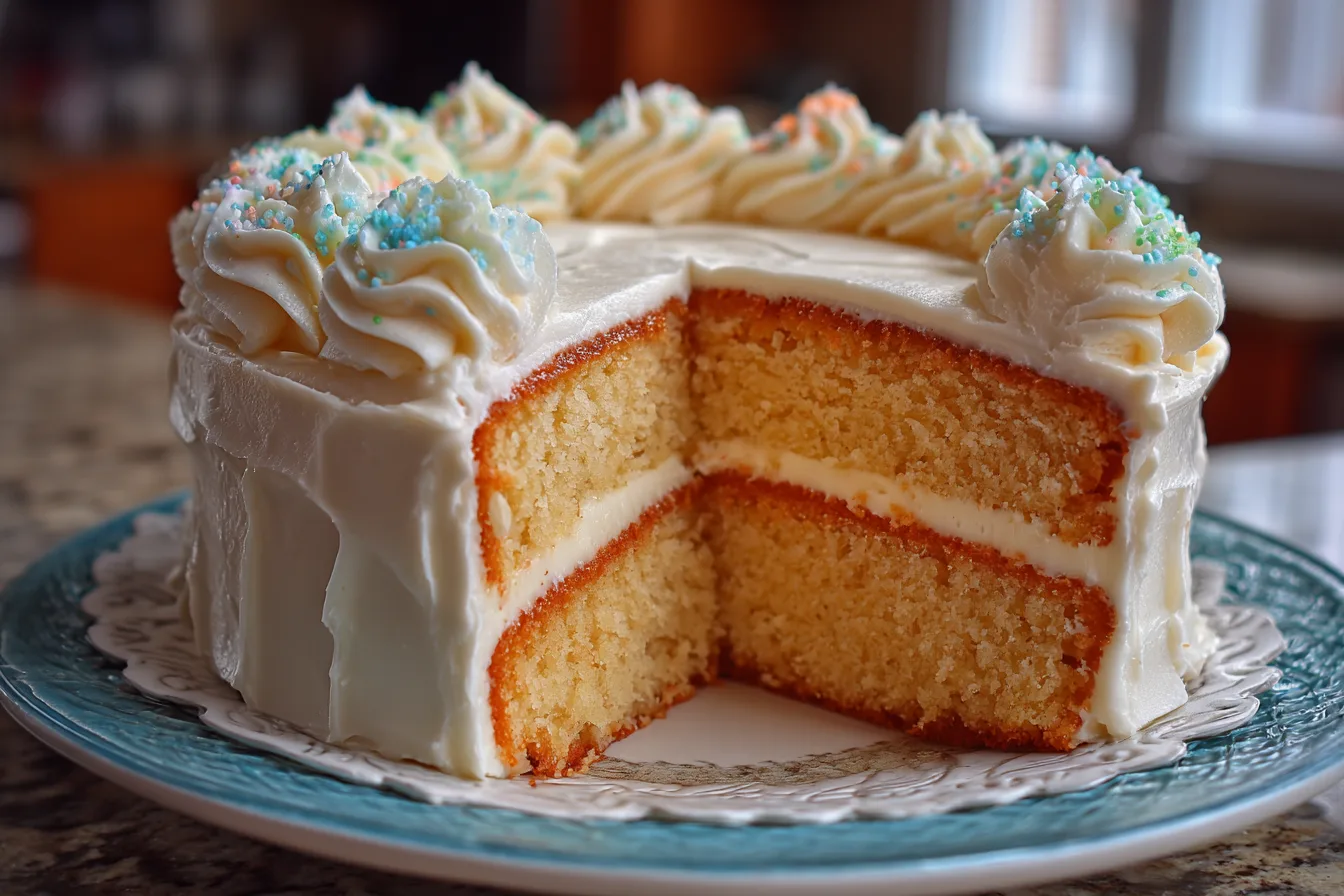
A Vanilla Layer Cake with Buttercream Frosting is a tender, lightly sweetened sponge layered with smooth, rich frosting. This recipe relies on simple ingredients like flour, sugar, eggs, butter, and pure vanilla extract, creating a timeless dessert that pairs seamlessly with the silky texture of buttercream. Baked to golden perfection and stacked with care, it delivers a comforting, indulgent treat.
Recipe Overview
| Prep Time | 30 minutes |
|---|---|
| Cook Time | 45 minutes |
| Total Time | 1 hour 35 minutes |
| Servings | 8 |
| Difficulty | Easy |
| Cuisine | American |
Why This Recipe Works
I’ve baked hundreds of layer cakes, but this vanilla version consistently outperforms others. The structure is clean, the flavors pure, and the technique forgiving—perfect for beginners or rushed bakers. By emphasizing room-temperature eggs and buttercream emulsified with precise acidity, the cake achieves a velvety crumb and a frosting that adheres well to each layer without overpowering.
Many commercial cakes mask thin batter with excessive frosting or artificial additives. This recipe’s strength lies in its simplicity: flour, sugar, and butter form a sturdy base, while eggs whip into a stable foam. The result is a cake that’s moist but not dense, balanced but not cloying. For me, the best part is watching it rise uniformly in the oven, a testament to the harmony of ingredients.
Ingredients
| Ingredient | Quantity | Notes & Substitutions |
|---|---|---|
| All-purpose flour | 2 cups | Use sifted flour for even texture; substitute cake flour for a lighter crumb |
| Baking powder | 1 teaspoon | Always fresh—replace if past 90 days for optimal rise |
| Salt | 1/2 teaspoon | Non-iodized kosher or sea salt recommended in place of table salt |
| Unsalted butter | 1 cup | Softened to room temperature; European-style butter deepens flavor |
| Granulated sugar | 2 cups | For a coarser texture, swap with superfine sugar; avoid brown sugar |
| Large eggs | 4 | Room temperature ensures smooth blending; cold eggs deflate air in batter |
| Milk (whole or non-dairy) | 1 cup | Oat or almond milk replace dairy; avoid evaporated or buttermilk |
| Vanilla extract | 2 teaspoons | Use pure extract, not imitation; coconut extract works as an alternative |
Step-by-Step Instructions
Phase 1: Preparing the Batter
- Preheat oven to 350°F (175°C). Grease two 9-inch round cake pans with butter and line bottoms with parchment paper.
- Whisk flour, baking powder, and salt in a large bowl. Set aside for dry ingredient mixing.
- Cream butter and sugar in a stand mixer with a paddle attachment until light and fluffy (4-5 minutes). Add eggs one at a time, blending thoroughly after each.
- Add vanilla extract and sour cream to the butter-sugar mixture. Mix on medium until well combined for moisture.
- Alternate adding dry ingredients and milk in thirds, beginning and ending with dry ingredients. Mix just until incorporated.
Phase 2: Baking the Layers
- Divide batter evenly between prepared pans. Tap pans on the counter to remove air bubbles.
- Cook for 28-32 minutes until a toothpick inserted in centers comes out clean. Rotate pans halfway through baking.
- Let layers cool in pans for 10 minutes, then run a knife along edges. Invert onto racks to release parchment paper.
- Allow layers to cool completely. Cover with paper while cooling to prevent frosting absorption.
- Prepare buttercream by beating butter until smooth, gradually adding powdered sugar and vanilla extract.
Phase 3: Cooling and Frosting
- Stack the first cooled layer on a serving plate. Spread buttercream evenly over the top using an offset spatula.
- Repeat with remaining layer and top with a thin crumb coat of frosting for dust capture.
- Cool the assembled cake in the refrigerator for 15 minutes before applying final buttercream layers.
- Use bench scrapers to achieve smooth sides and a rounded top for presentation.
- Finish with optional decorations like piped borders or sprinkled berries.
Chef Tips for Perfect Results
- Butter temperature matters: Use butter at 65-70°F (18-22°C) for aeration. Cold butter creates a dense texture.
- Measure flour correctly: Spoon flour into cups and level off. Excess flour can lead to toughness.
- Don’t skip sour cream: It reduces acidity to brighten vanilla flavor and adds moisture for a delicate crumb.
- Cook on the lower rack: This prevents top browning too quickly while centers set.
- Frosting emulsification: Add 1-2 tablespoons milk to buttercream to stabilize it for easier spreading.
Common Mistakes to Avoid
1. Rushing the cooling process: Frosting warm cake causes buttercream to melt and slouch. Ensure layers are fully cooled to counter 24 hours or refrigerate 1 hour.
2. Overmixing after adding flour: This develops gluten, making cake chewy instead of tender. Mix until batter clears the paddle, no more than 2-3 rotations.
3. Skipping parchment paper: Undercooked layers stick to pans, tearing when flipped. Linings also prevent undercooked centers in high-sided pans.
4. Ignoring altitude adjustments: Above 3,500 feet, cakes dry faster. Reduce oven temperature 25°F (15°C) and check doneness 2-3 minutes early.
5. Using outdated leaveners: Baking powder loses efficacy over time. Replace every 6-9 months or test using water—fresh powder will fizz vigorously.
Variations and Substitutions
| Ingredient | Substitution | Impact on Flavor |
|---|---|---|
| Vanilla extract | Vanilla bean paste | Enhances visual appeal with flecks and adds deeper vanilla notes |
| Granulated sugar | Coconut sugar | Subtly caramel flavor but darker color; reduce by 10% in quantity |
| Whole milk | Coconut milk | Creates a tropical note; best for gluten-free flour blends |
Serving Suggestions and Pairings
Top with fresh strawberries and a dusting of confectioners’ sugar for afternoon tea. Serve slices with chilled glasses of non-dairy ice cream for a warm-cold contrast. For breakfast, add a dollop of whipped cream and a drizzle of fruit compote.
Storage and Reheating
| Method | Duration | Instructions |
|---|---|---|
| Refrigeration | 5 days | Store in an airtight container. Place parchment between layers to prevent frosting drag. |
| Freezing | 2 months | Wrap cooled layers in plastic film and freeze flat. Frost after thawing for 24 hours in fridge. |
| Oven reheating | 300°F (150°C), 10-15 minutes | Heat on a baking sheet covered with foil. Monitor closely to avoid frosting melting. |
Nutritional Information
| Nutrient | Amount per Serving |
|---|---|
| Calories | 520 |
| Protein | 6g |
| Fat | 28g |
Approximate values. Actual counts may vary based on exact measurements and substitutions.
Frequently Asked Questions
How to substitute sour cream in this recipe?
Use plain Greek yogurt thinned with 1 tablespoon of milk. For best results, substitute 1:1 with dairy-free yogurt in the same temperature range.
Can I bake this in a convection oven?
Yes, reduce temperature by 25°F (14°C) and rotate pans every 15 minutes. Convection baking accelerates moisture loss; cover lightly with foil if browning too quickly.
Why did my cake layers sink in the middle?
Overmixing incorporates excess air pockets, which expand and then collapse. Check oven preheating time and ensure batter was rotated while cooling after baking.
How to make this cake ahead of time?
Bake and fully cool layers the day before. Store in an airtight container at room temperature. Prepare buttercream same day to maintain freshness.
Is this cake suitable for a birthday party?
Absolutely. Multiply pan sizes for large gatherings. Frosting can be tinted using gel food coloring—1/4 teaspoon per cup of buttercream achieves vibrant hues without taste alteration.
Conclusion
Vanilla Layer Cake with Buttercream Frosting proves that quality comes from precision, not complexity. With room-temperature eggs, careful layering, and a crumb that defies stalling, it delivers a dessert that feels homemade. The vanilla flavor remains pure—no hidden notes or overpowering additions. Serve it as-is or with simple pairings; let the buttercream’s smoothness carry the flavor. This cake, in all its understated elegance, is a cornerstone of classic comfort baking.
Print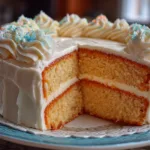
Vanilla Layer Cake with Buttercream Frosting
- Total Time: 95
- Yield: 8 servings 1x
- Diet: Vegetarian
Description
A tender, lightly sweetened vanilla sponge layered with rich, silky buttercream. Baked to golden perfection, this classic American cake offers a balanced, indulgent treat with a forgiving technique for beginners.
Ingredients
2 cups all-purpose flour
1 teaspoon baking powder
1/2 teaspoon salt
1 cup unsalted butter, softened
2 cups granulated sugar
4 large eggs, room temperature
1 cup milk (whole or non-dairy)
2 teaspoons pure vanilla extract
Instructions
Preheat oven to 350°F (175°C) and grease two 9-inch round cake pans
Sift flour, baking powder, and salt into a bowl
In a separate bowl, cream butter and sugar until light and fluffy
Add eggs one at a time, beating well after each addition
Alternate adding dry ingredients and milk to the butter mixture, beginning and ending with dry ingredients
Mix in vanilla extract
Divide batter evenly between prepared pans
Bake 28-32 minutes or until a toothpick inserted in center comes out clean
Cool layers completely on wire racks
Whip buttercream (instructions not included here) and stack layers with frosting in between
Notes
Sift flour first for even texture
Use room-temperature dairy and eggs for best emulsification
European-style butter enhances flavor
Cooled layers maintain shape better
Storage: Keep in airtight container at room temperature up to 2 days
- Prep Time: 30
- Cook Time: 45
- Category: Trending
- Method: Baking
- Cuisine: American
Nutrition
- Serving Size: 1 slice (1/8 of cake)
- Calories: 450
- Sugar: 48g
- Sodium: 450mg
- Fat: 25g
- Saturated Fat: 15g
- Carbohydrates: 60g
- Fiber: 1g
- Protein: 6g
- Cholesterol: 90mg